Packet Waveform Gallery
This page presents representative oscilloscope captures obtained with REVA v3.3beta20d driving resonant loads.
The images are intended primarily for visual exploration and illustrate the wide variety of packet structures that can be produced.
Packeted Resonant Excitation
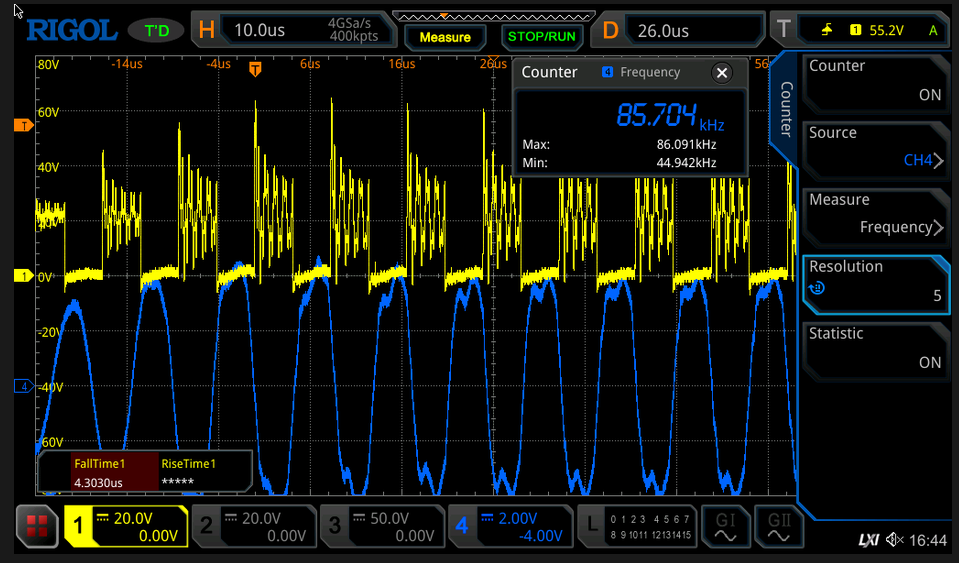
Example showing packetized excitation of a resonant system.
High-Frequency Burst Train
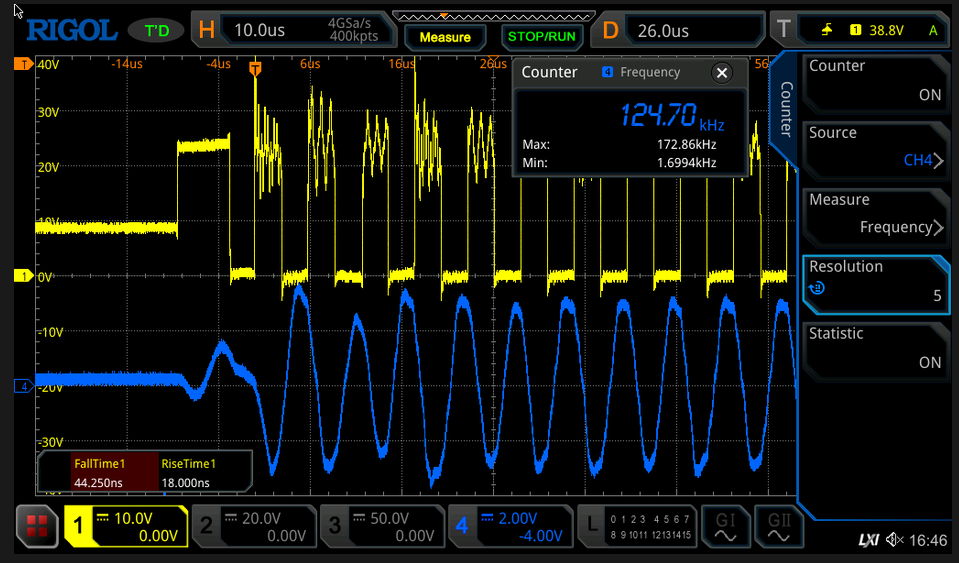
Carrier operation near 125 kHz with visible resonant response.
Burst Packet With Ringdown
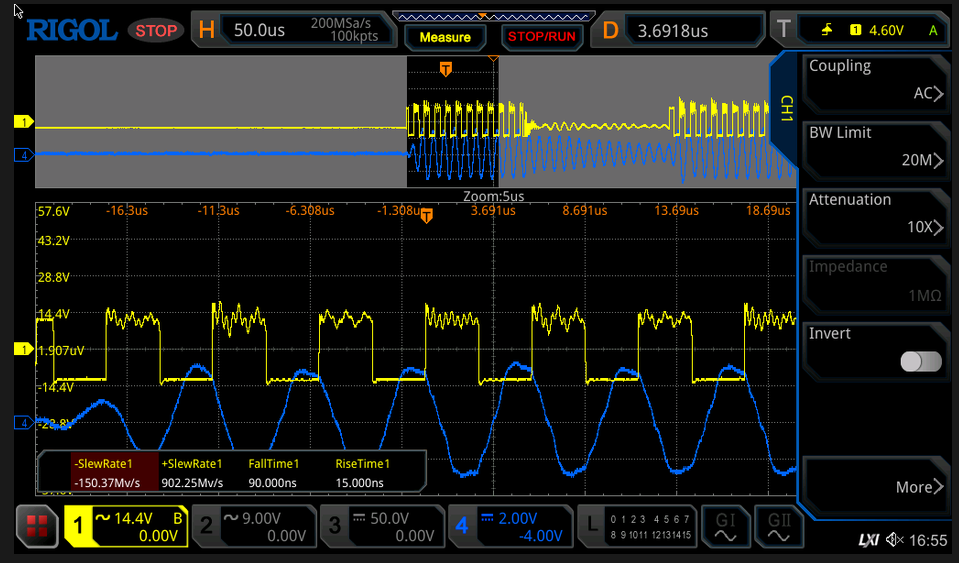
Oscillation continues after excitation has stopped.
Symmetrical Packet Sequence
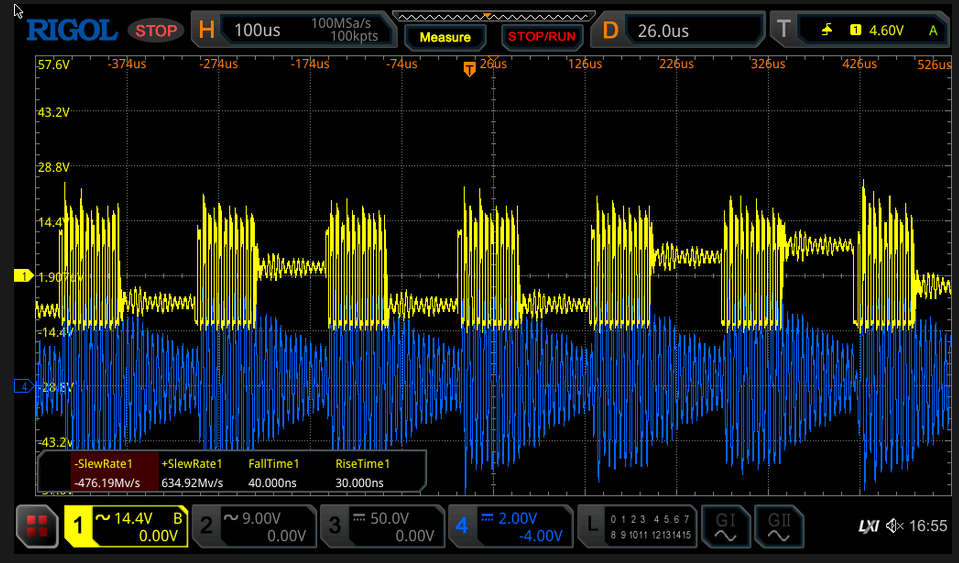
Regular burst groups separated by relaxation intervals.
Long Packet Family
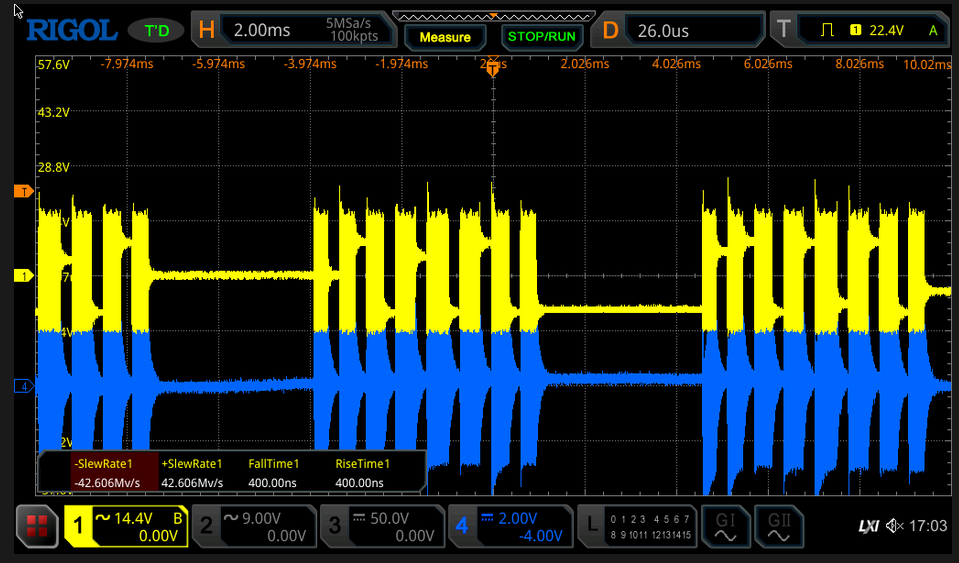
Packet groups separated by extended inactive periods.
Transition Into Oscillation
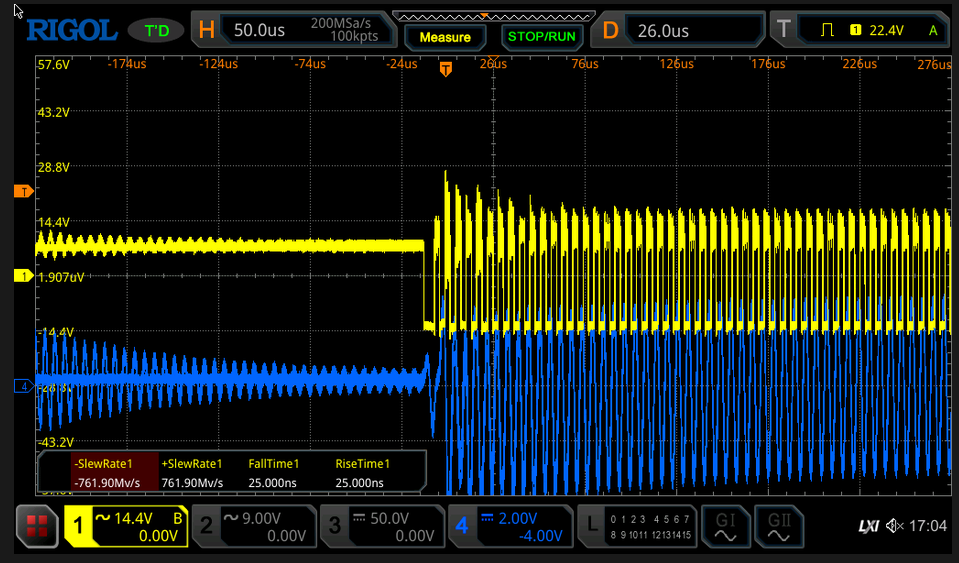
Example showing the build-up of oscillation after burst injection.
Four-Packet Structure
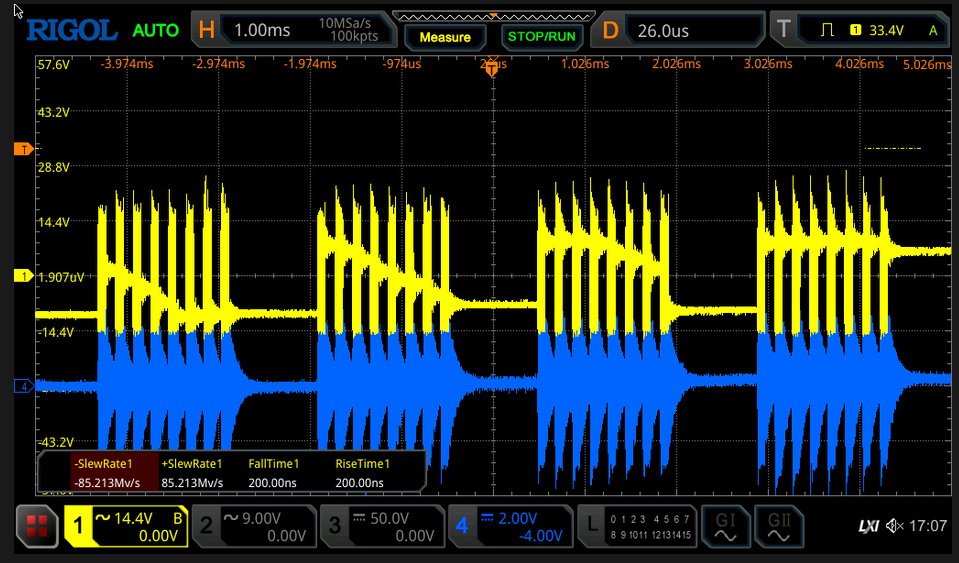
Multiple burst groups distributed over time.
Sparse Packet Geometry
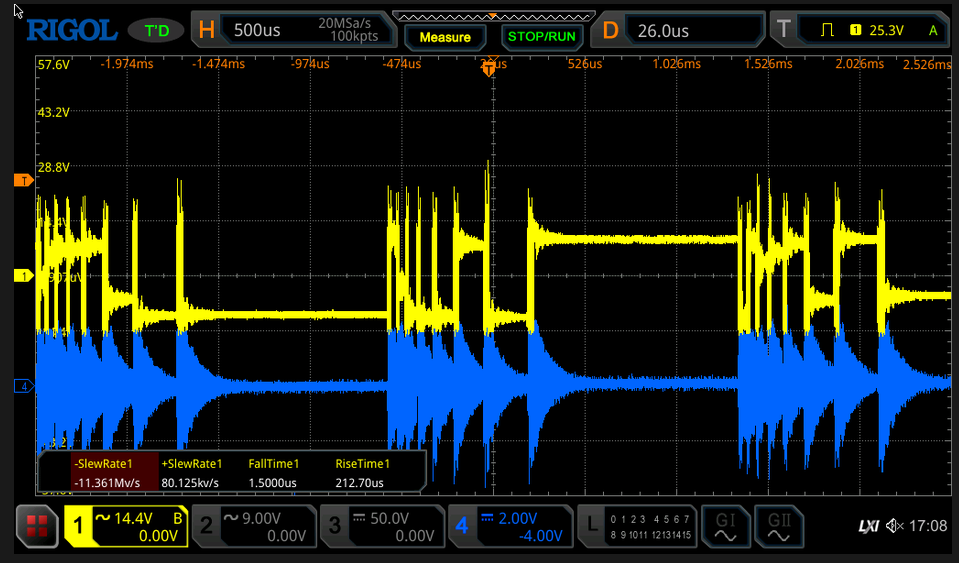
Separated burst groups allowing substantial relaxation between packets.
Irregular Packet Family
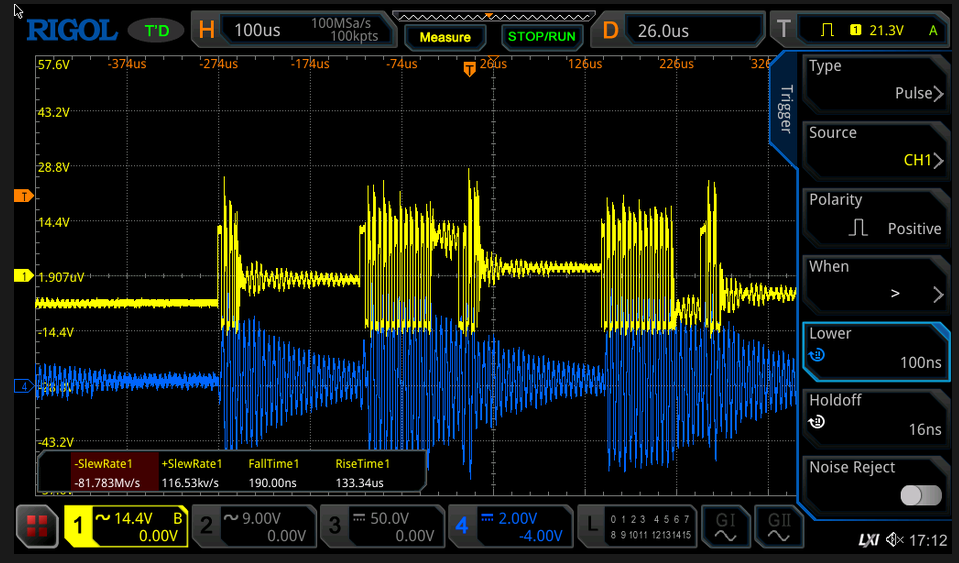
Non-uniform packet geometry generated by custom segment definitions.
Trace Identification
Yellow trace:
- Half-bridge output
Blue trace:
- Resonant response of the load
Remarks
The exact waveform shape depends strongly on:
- carrier frequency,
- packet frequency,
- burst length,
- packet geometry,
- resonant load,
- coupling conditions,
- measurement location.
Consequently, the images shown here should be regarded as examples rather than fixed reference waveforms.
Every resonant system produces its own characteristic response, making REVA capable of generating a large variety of packet structures and excitation patterns.